

ASTM TYPE I/II
PRODUCTS
ASTM-C-150
STANDARD
28/02/2020
UPDATE
Portland cement; limestone, marl, clay, iron ore, pyrite ash, bauxite, etc. at appropria te proportions of raw materials, milling, cooking of the clinker obtained, the amount of retarder (generally composed of a ground with gypsum); It is the product gains strength after a certain time being mixed with water. In general, the structures that require high strength, cold weather in poured concrete, prefabricated structures, tunnels – in the mold applications, construction chemicals used in the manufacture and application of concrete foundation.
Physical Properties
Chemical Properties
It can be put on the market as bulk, in 1,5 ton big bags, in sling bags and also in 25 and 50 kg bags.
PACKAGING
Our product is certified by British Standard Institute (B.S.I.) according to ASTM C150 to use ASTM marking.
QUALITY CONTROL
Nuray Bobinci | International Sales Manager
FOR INFORMATION
It is updated on 28/02/2020.
UPDATE
The product specifications described above are intended solely for the purpose of informing customers and our company does not assume any responsibility.
ASTM TYPE IL
PRODUCTS
ASTM-C-595
STANDARD
01/05/2023
UPDATE
It is the product that is obtained by grinding Portland cement clinker together with a certain amount of set regulator (gypsum) with additives (limestone) at the rate defined in the standards (min 5% -max 20%) and gains strength by freezing after a certain period of time by mixing with water.
Physical Properties
Chemical Properties
It can be put on the market as bulk, in 1,5 ton big bags, in sling bags and also in 25 and 50 kg bags.
PACKAGING
Our product is certified by British Standard Institute (B.S.I.) according to ASTM C595
QUALITY CONTROL
Nuray Bobinci | International Sales Manager
FOR INFORMATION
It is updated on 01/05/2023.
UPDATE
The product specifications described above are intended solely for the purpose of informing customers and our company does not assume any responsibility.
CEM I 42,5 R
PRODUCTS
EN 197-1:2011
STANDARD
28/02/2020
UPDATE
Portland cement; limestone, marl, clay, iron ore, pyrite ash, bauxite, etc. at appropria te proportions of raw materials, milling, cooking of the clinker obtained, the amount of retarder (generally composed of a ground with gypsum); It is the product gains strength after a certain time being mixed with water. In general, the structures that require high strength, cold weather in poured concrete, prefabricated structures, tunnels – in the mold applications, construction chemicals used in the manufacture and application of concrete foundation.
Physical Properties
Chemical Properties
* Can be available with Low Hexavalent Chromium content (below 2 ppm) and Low Alkali Equivalent content (below 0,60 %).
It can be put on the market as bulk, in 1,5 ton big bags, in sling bags and also in 25 and 50 kg bags.
PACKAGING
Our product has EC certificate given by the Council for Quality and Environment (CQE) and has the right to use CE mark.
QUALITY CONTROL
Nuray Bobinci | International Sales Manager
FOR INFORMATION
It is updated on 28/02/2020.
UPDATE
The product specifications described above are intended solely for the purpose of informing customers and our company does not assume any responsibility.
CEM 1 52.5 N
PRODUCTS
EN 197-1:2011
STANDARD
28/02/2020
UPDATE
Portland cement is the product, produced by grinding clinker manufactured by burning raw materials like limestone, marl, clay, iron ore, pyrite ash, bauxite at appropriate proportions and by addition of a certain amount of retarder (generally gypsum) and sets and gains strength after a certain time being mixed with water.
It is generally used in works requiring higher strentgh values, concrete works at low temperatures, precast buildings, tunnel-form applications, building chemical manufacturing and foundations.
Additionnaly, it is suitable to be used in sea water . Mineralogical composition of this cement permits to be resistant to sulfate ions in presence of chloride ions.
Physical Properties
Chemical Properties
(1) Cement: It is manufactured to be resistant to sea water according to French standard NF P 15-317. That’s why the “*” sign features; NF P 15-317.
* Can be available with Low Hexavalent Chromium content (below 2 ppm) and Low Alkali Equivalent content (below 0,60 %).
It can be put on the market as bulk, in 1,5 ton big bags, in sling bags and also in 25 and 50 kg bags.
PACKAGING
Our product has EC certificate given by the Council for Quality and Environment (CQE) and has the right to use CE mark.
QUALITY CONTROL
Nuray Bobinci | International Sales Manager
FOR INFORMATION
It is updated on 28/02/2020.
UPDATE
The product specifications described above are intended solely for the purpose of informing customers and our company does not assume any responsibility.
CEM I 42,5 R - SR5
PRODUCTS
EN 197-1:2011
STANDARD
28/02/2020
UPDATE
CEM I 42,5 5R-SR5 is the product which is obtained by griding clinker, w hich is acquired by mixing raw materials like limes tone, marl, clay, iron ore, pyrite ash, bauxite etc. at appropriate rates, grinding and boiling them, with an amount of reamer (generally gypsum) and mixing it with water and which gains resistance by freezing up in a certain time.
It may be generally used in areas where normal portland cements are used and it is also suitable for use in areas exposed to sulphated water like like dam constructions, tunnels, port constructions, irrigation channels, construction chemicals as the amount of C3A is below 5%.
Physical Properties
Chemical Properties
* Can be available with Low Hexavalent Chromium content (below 2 ppm) and Low Alkali Equivalent content (below 0,60 %).
It can be put on the market as bulk, in 1,5 ton big bags, in sling bags and also in 25 and 50 kg bags.
PACKAGING
Our product has EC certificate given by the Council for Quality and Environment (CQE) and has the right to use CE mark.
QUALITY CONTROL
Nuray Bobinci | International Sales Manager
FOR INFORMATION
It is updated on 28/02/2020.
UPDATE
The product specifications described above are intended solely for the purpose of informing customers and our company does not assume any responsibility.
CEM II/A-S 42,5 R
PRODUCTS
EN 197-1:2011
STANDARD
28/02/2020
UPDATE
It is obtained by grinding a certain amount of portland cement clinker with mineral additives (slag) at proportions (maximum 20%) defined in respective standards with rea mer (gypsum) and gains resistance by freezing a while after it is mixed with water.
It is generally used in all practices where portland cement is used. Its hydration heat is lower than portland cement. It is suitable for use in concrete works in aggressive environments containing ions like sulphide and/or chloride.
Physical Properties
Chemical Properties
* Can be available with Low Hexavalent Chromium content (below 2 ppm) and Low Alkali Equivalent content (below 0,60 %).
It can be put on the market as bulk, in 1,5 ton big bags, in sling bags and also in 25 and 50 kg bags.
PACKAGING
Our product has EC certificate given by the Council for Quality and Environment (CQE) and has the right to use CE mark.
QUALITY CONTROL
Nuray Bobinci | International Sales Manager
FOR INFORMATION
It is updated on 28/02/2020.
UPDATE
The product specifications described above are intended solely for the purpose of informing customers and our company does not assume any responsibility.
CEM II/B-S 42,5 R
PRODUCTS
EN 197-1:2011
STANDARD
28/02/2020
UPDATE
The cement is produced by grinding a mixture of additives (slag) prescribed by standards (min. % 21, max. % 35) with portland cement clinker by addition of a certain amount of retarder (generally gypsum) and sets and gains strength after a certain time being mixed with water.
Generally the product can be used in all places where portland cement is applicable. Hydration heat is relatively lower than that of portland cement. It can deliver best results especially in concrete works performed in aggresive areas where the content of sulphate and/or chloride is higher.
Physical Properties
Chemical Properties
* Can be available with Low Hexavalent Chromium content (below 2 ppm) and Low Alkali Equivalent content (below 0,60 %).
It can be put on the market as bulk, in 1,5 ton big bags, in sling bags and also in 25 and 50 kg bags.
PACKAGING
Our product has EC certificate given by the Council for Quality and Environment (CQE) and has the right to use CE mark.
QUALITY CONTROL
Nuray Bobinci | International Sales Manager
FOR INFORMATION
It is updated on 28/02/2020.
UPDATE
The product specifications described above are intended solely for the purpose of informing customers and our company does not assume any responsibility.
CEM II/C-M (P-LL) 32,5 R
PRODUCTS
TS EN 197-5:2021
STANDARD
September 2021
UPDATE
The product contains 50-64% clinker, 18-30% natural pozzolana, 6-20% limestone, 0-5% minor additional components. It is a type of blended cement obtained by grinding portland cement clinker with mineral additive and gypsum as a retarder.
The product delivers the strength values respectively in late periods compared to CEM I and CEM II types. Water/cement ratio is respectively higher. It is much more resistant to alkali and aggretage reactions. It is best for repairing works, foundation filling and used in stucco and building chemicals manufacturing.
Physical Properties
Chemical Properties
* Can be available with Low Hexavalent Chromium content (below 2 ppm).
It can be put on the market as bulk, in 1,5 ton big bags, in sling bags and also in 25 and 50 kg bags.
PACKAGING
Our product is certified by CPC according to TS EN 197-5:2021 and has the right to use the G mark.
QUALITY CONTROL
Nuray Bobinci | International Sales Manager
FOR INFORMATION
UPDATE
The product specifications described above are intended solely for the purpose of informing customers and our company does not assume any responsibility.
CEM II/A-LL 42.5 R
PRODUCTS
EN 197-1
STANDARD
December 2026
UPDATE
The cement is produced by grinding a mixture of additives (limestone) prescribed by standards (min % 6- max.%20) with portland cement clinker by addition of a certain amount of retarder (generally gypsum) and sets and gains strength after a certain time being mixed with water. Generally the product can be used in all places where portland cement is applicable. Hydration heat is relatively lower than that of portland cement. It can deliver best results especially in concrete works performed in aggresive areas where the content of sulphate and/or chloride is higher.
Physical Properties
| Property | Nuh Çimento San. A.Ş. (Typical Values) | EN 197-1 Requirement | Unit |
| Initial Setting Time | 100 – 160 | ≥ 60 | minutes |
| Final Setting Time | 160 – 240 | – | minutes |
| Soundness (Le Chatelier) | 0 – 2 | ≤ 10 | mm |
| Specific Surface (Blaine) | 4200 – 5000 | – | cm²/g |
| Bulk Density | 900 – 1000 | – | g/l |
| Compressive Strength (2 days) | 23.0 – 33.0 | ≥ 20.0 | MPa |
| Compressive Strength (28 days) | 48.0 – 60.0 | 42.5 – 62.5 | MPa |
Chemical Properties
| Component | Nuh Çimento San. A.Ş. (Typical Values) | EN 197-1 Requirement | Unit |
| SO₃ | 2.30 – 2.90 | ≤ 4.0 | % |
| Cl⁻ | < 0.05 | ≤ 0.10 | % |
| Loss on Ignition | 6 – 10 | – | % |
| Insoluble Residue | 1 – 2 | ≤ 5.0 | % |
| Limestone (LL) Content | 6 – 20 | 6 – 20 | % |
Delivery
The product can be supplied in the following forms:
- Bulk
- 1.5-ton / 2 ton big bags
- Sling bags
- 25 kg or 50 kg kraft paper bags
The product specifications described above are intended solely for the purpose of informing customers and our company does not assume any responsibility.
Nuray Bobinci | International Sales Manager
FOR INFORMATION
OWC
PRODUCTS
API Spec 10A& Q1
STANDARD
28/02/2020
UPDATE
Type G cement is the product obtained by grinding portland cement clinker with one or more types of calcium sufates with portland cement clinker. No additives can be used during production of Type G oil well cement except clinker and calcium sulfate This type of cement is aimed to be used as oil well cement basically.
Type G Oil Well Cement has high sulfate-resistant (HSR) and moderate sulfate-resistant (MSR) grades. In Nuh Cement only HSR grade is produced.
Physical Properties
Chemical Properties
* Can be available with Low Hexavalent Chromium content (below 2 ppm).
It is put on the market as bulk and in 1,5 ton big bags.
PACKAGING
Our product has Certificate of Authority to Use The Official API Monogram given by American Petroleum Institute and has the right to use API Monogram mark.
QUALITY CONTROL
Nuray Bobinci | International Sales Manager
FOR INFORMATION
It is updated on 28/02/2020.
UPDATE
The product specifications described above are intended solely for the purpose of informing customers and our company does not assume any responsibility.
GROUND GRANULATED BLAST FURNACE SLAG
PRODUCTS
TS EN 15167-1:2006
STANDARD
28/02/2020
UPDATE
The glassy material which is obtained by rapid cooling of the molten slag in the appropriate composition obtained when melting and refining in an iron ore furnace, containing glass slag at least 2/3 of the mass and exhibiting hydraulic properties when properly activated.
Ground granulated blast furnace slag; Fine dust obtained by grinding grain blast furnace slag.
Ground Granulated Blast Furnace Slag
Reference Cement Properties
50 % Reference Cement, 50 % Ground Granulated Blast Furnace Slag By Mass
It is put on the market as bulk and in 1.5 ton big bags.
PACKAGING
Our product has Certificate of Constancy of Performance given by CPC and has the right to use CE mark.
QUALITY CONTROL
Nuray Bobinci | International Sales Manager
FOR INFORMATION
It is updated on 28/02/2020.
UPDATE
The product specifications described above are intended solely for the purpose of informing customers and our company does not assume any responsibility.
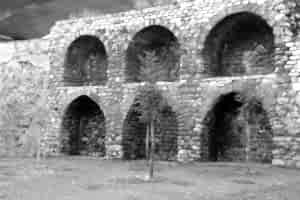
Early History and Development of Portland Cement


Since the first constitution of civilizations, a material has been sought to bind the stones in solid form. The Assyrians and the Babylonians used clay for this purpose, and in Egyptians, they developed lime and gypsum mortar as binding material in the construction of structures such as Pyramids. The Greeks further developed the binding materials, and eventually the Romans introduced the cement producing structures that provided continuous strength. Most of the building foundations in the Roman forum were built in mortar form at a depth of 3.5 meters in some places. The great Roman baths, Colosseum and Basilica of Constantine, built around BC.27, are examples of early Roman architecture using cement mortar.

